
Description
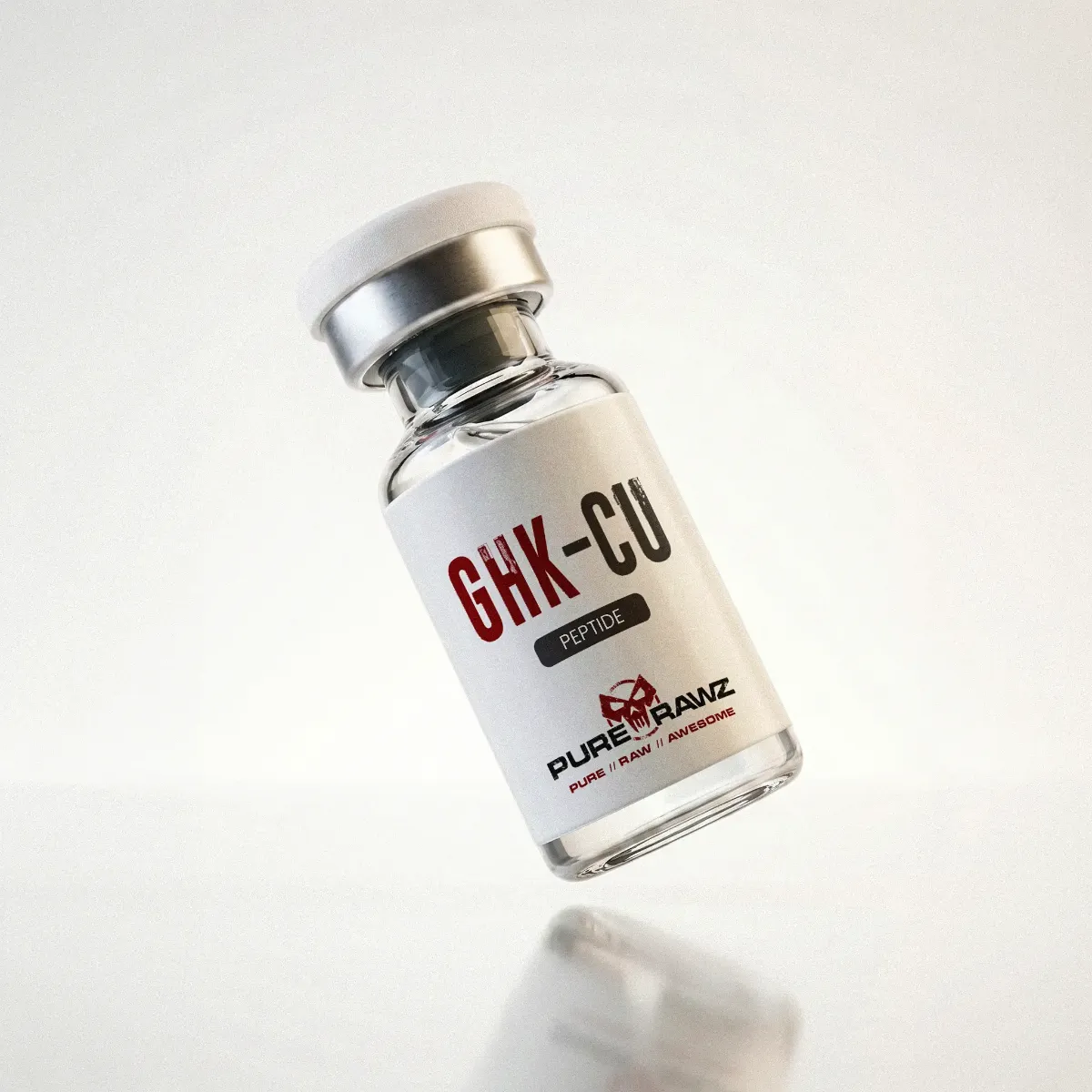
Our GHK-Cu is a copper-binding tripeptide, supplied as freeze-dried vials, a nasal spray and capsules. Each batch is checked for 99%+ purity. It’s intended for research use only.
What is GHK-Cu?
GHK-Cu is the tripeptide glycyl-histidyl-lysine bound to a copper ion. GHK occurs naturally in human plasma, saliva and urine, and its levels fall with age.
It’s used widely in skin and wound research, and in cosmetic formulas.
Mechanism of action
GHK binds copper tightly and can deliver it to cells. Copper is a cofactor for lysyl oxidase, the enzyme that cross-links collagen and elastin, and for antioxidant enzymes.
In cell and animal studies GHK-Cu increased collagen and glycosaminoglycan production, attracted repair cells to wounds, and changed the activity of many genes involved in tissue remodeling.
GHK-Cu research
Loren Pickart, who first isolated GHK in 1973, has published reviews of its effects on collagen synthesis, wound contraction and gene expression in cell and animal studies.
Maquart and colleagues reported that GHK-Cu increased collagen in rat wound chambers.
To read the original papers, start with this PubMed search for GHK-Cu.
GHK-Cu sizes and forms
There are 7 ways to buy it, from $39.99 to $349.99:
- Peptide, 50mg: $39.99
- Peptide, 100mg: $59.99
- Peptide, 200mg: $99.99
- Peptide, 500mg: $199.99
- Peptide, 1000mg: $349.99
- Nasal Spray, 500mcg per spray/10ml/50mg: $69.99
- Capsules, 2mg per capsule/60ct/120mg: $49.99
The vials hold a freeze-dried (lyophilized) powder under a sealed stopper. Freeze-drying keeps the peptide stable in transit. You add sterile bacteriostatic water to dissolve it before use.
The nasal spray is pre-mixed in a metered pump bottle. The label gives the amount per spray and the total, which makes the math simple.
The capsules are pre-filled, so each one has the same amount. The size option lists it per capsule.
Study design notes
Labs studying tissue repair often compare peptides that act through different routes, such as blood vessel growth versus cell migration, to see whether combining them adds anything.
Photograph or measure wounds at fixed intervals with the same setup each time. It’s the simplest way to keep healing data comparable.
Typical endpoints include wound closure rate, tensile strength of repaired tissue, collagen deposition and new blood vessel counts on histology. Gut models often score ulcer size and lining thickness.
Mixing and concentration
The liquid you add sets the concentration. For a 50mg vial:
- 2mL of bacteriostatic water gives 25mg/mL
- 3mL of bacteriostatic water gives 16.67mg/mL
- 5mL of bacteriostatic water gives 10mg/mL
Let the vial reach room temperature, run the water slowly down the glass, and swirl gently until it’s clear. Don’t shake it.
GHK-Cu at a glance
- Compound: GHK-Cu
- Also known as: copper peptide, prezatide copper
- CAS number: 49557-75-7
- Sequence: Gly-His-Lys bound to copper(II)
- Class: copper-binding tripeptide
- Forms: peptide vial, nasal spray and capsules
- Options: 7 sizes and forms
- Purity: 99% or higher, verified by first- and third-party testing
- Use: laboratory research only
Purity and batch testing
We test each batch for identity and purity before it ships, using HPLC and mass spectrometry, with independent third-party checks on top of our own.
The batch number on the label matches the certificate of analysis. If your lab keeps paperwork on file, ask us for it and we’ll email it over.
Keeping it fresh
Keep sealed vials in a freezer at -20°C or a fridge at 2 to 8°C, away from light. After mixing, store the vial in the fridge and use it within about four weeks. Refrigerate spray bottles after opening and keep the cap on.
Keep the container sealed at room temperature, away from heat, moisture and sunlight.
Label the container with the opening date. It saves guesswork later.
Working with it safely
Wear gloves and eye protection when you open or measure it, and work on a clean surface.
Label everything you prepare, keep it away from food areas, and follow your lab’s rules for disposing of sharps and chemical waste.
Before you start
- Bacteriostatic Water for reconstitution, or Sterile Water if you’ll use the whole vial at once
- sterile insulin-type syringes or pipettes for measuring
- alcohol swabs for the vial stopper
Other compounds to look at
- BPC-157: BPC-157 is a 15-amino-acid peptide based on a fragment of body protection compound, a protein first found in gastric juice.
- GHK Basic: GHK Basic is the tripeptide Gly-His-Lys without copper bound to it.
- BPC-157 + Osthole + Laxogenin Capsules, combining BPC-157 Arginine Salt, Osthole and Laxogenin
- Gastro Research Formula (BPC-157 + KPV + Larazotide), combining BPC-157, KPV and N-Acetyl Larazotide
- PAL-GHK: Pal-GHK (palmitoyl tripeptide-1) is the GHK tripeptide with a palmitic acid chain.
See the rest of our healing and recovery peptides and peptide nasal sprays for more options.
GHK-Cu FAQ
What do I mix it with?
Most labs use sterile bacteriostatic water. Add it slowly down the side of the vial and swirl gently until the powder dissolves. Don’t shake it.
How should I store it?
Follow the storage section above. In short: cold and dark for freeze-dried vials, room temperature and dry for capsules, tablets, powders and liquids, unless the label says otherwise.
What forms does it come in?
Freeze-dried vials, a nasal spray and capsules. Pick the one you want from the dropdown on this page.
Is GHK-Cu in stock?
Yes. It’s in stock and ships from our warehouse after your order clears.
Does it come with a certificate of analysis?
Yes. Every batch is tested, and we’ll email the certificate of analysis for your batch number on request.
Can it be used in people or animals?
No. It’s sold for laboratory research only and isn’t approved for human or veterinary use.
Buy GHK-Cu online
GHK-Cu is in stock from $39.99. Choose your option, add it to the cart and check out in a couple of minutes.
Need more for the same project? Have a look at our healing and recovery peptides and research peptides.
For laboratory research use only. Not for human or veterinary use. These statements have not been evaluated by the FDA.

Reviews
There are no reviews yet.