Description
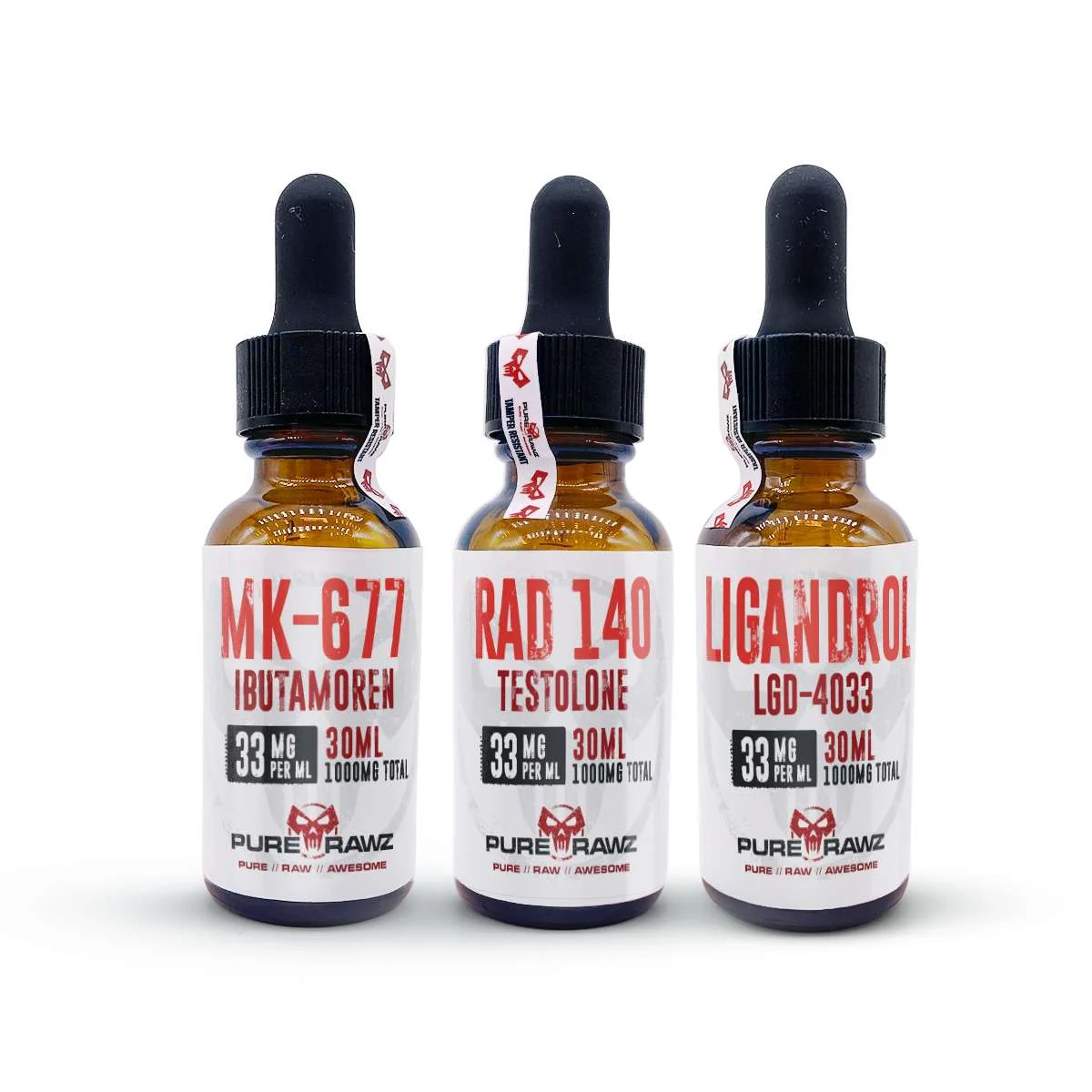
Mass Construction (MK-677 + RAD-140 + LGD-4033) – Product Information
Mass Construction is a unique combination of three research compounds: MK-677, RAD-140, and LGD-4033. Each compound offers distinct properties that may complement one another when researched together.
MK-677 is a growth hormone secretagogue, potentially promoting increased appetite and lean muscle mass. RAD-140 is a selective androgen receptor modulator (SARM), known for its potential to enhance muscle growth and strength. LGD-4033 is another SARM with similar muscle-building properties.
When researched together, these compounds may synergistically support muscle development and strength. MK-677 could potentially enhance the anabolic effects of RAD-140 and LGD-4033, contributing to improved muscle growth and recovery during a research study. However, it is crucial to emphasize that this combination is intended solely for research purposes and should not be used for human consumption.
- Mass Construction is a combination of three compounds: MK-677, RAD-140, and LGD-4033.
- MK-677 is offered in 33mg per ml for 30ml, totaling 1000mg.
- RAD-140 is offered in 33mg per ml for 30ml, totaling 1000mg.
- LGD-4033 is offered in 67mg per ml for 30ml, totaling 2000mg.
MK-677 (Ibutamoren)
MK-677 is offered in 33mg per ml for 30ml, totaling 1000mg.
A recent study set out to investigate the effects of MK-677 as a Ghrelin mimetic on body composition and clinical outcomes in healthy older adults. It was found that MK-677 enhanced fluctuating growth hormone secretion and markedly increased fat-free mass over a 12-month period. More extensive research and randomized trials could potentially evaluate its efficacy in improving physical function and health outcomes in select populations.
| MK-677 | |
| CAS Number | 159634-47-6 |
| Molar Mass | 528.67 g/mol |
| Chemical Formula | C14H12F6N2O |
| IUPAC Name | 2-amino-2-methyl-N-[1-(1-methylsulfonylspiro[2H indole-3,4′-piperidine]-1′-yl)-1-oxo-3-phenylmethoxypropan-2-yl]propenamide |
RAD-140
RAD 140 is offered in 33mg per ml for 30ml, totaling 1000mg.
Testolone, also known as RAD 140, as a research compound is being investigated for its potential ability to enhance muscle hypertrophy. Current studies are examining the preclinical characterization of selective androgen receptor modulators and anabolic activity in male cynomolgus monkeys. To assess anabolic activity, one study examined gross body weight, which we know to be a sensitive marker of anabolic androgen action in young nonhuman primates. The results on animal body weight of 28-day dosing with RAD 140 were found to be statistically significant. This shows massive promise in the potential muscular gains brought on by Testolone.
| RAD-140 | |
| CAS Number | 1182367-47-0 |
| Molar Mass | 393.83 g/mol |
| Chemical Formula | C20H16ClN5O2 |
| IUPAC Name | 2-chloro-4-{[(1R,2S)-1-[5-(4-cyanophenyl)-1,3,4-oxadiazol-2-yl]-2-hydroxypropyl]amino}-3-methylbenzonitrile |
LGD-4033
LGD 4033 is offered in 67mg per ml for 30ml, totaling 2000mg.
Ligandrol is a novel nonsteroidal oral selective androgen receptor modulator currently being investigated in research as a potential treatment for conditions relating to muscle dystrophy and osteoporosis.
Recent studies investigated the effects of LGD 4033 on muscle tissue in ovariectomized rats. A daily dose of LGD was administered and calculated according to the body weight of each individual rat at the onset of the study. Results and changes were noted as soon as week 2, the control group having weighed significantly less than rats undergoing LGD treatment. This difference remained until the end of the study, irrespective of LGD treatments. Additionally, the LGD treatments resulted in a higher number of capillaries in all muscles studied. Longer randomized trials and research could potentially evaluate its efficacy in improving physical function and health outcomes in select populations.
| LGD-4033 | |
| CAS Number | 1165910-22-4 |
| Molar Mass | 338.253 g/mol |
| Chemical Formula | C14H12F6N2O |
| IUPAC Name | 4-[(2R)-2-[(1R)-2,2,2-trifluoro-1-hydroxyethyl]pyrrolidin-1-yl]-2-(trifluoromethyl)benzonitrile |


Reviews
There are no reviews yet.