

Description
Regulatory Notice – Dulaglutide (Trulicity®): Dulaglutide is an FDA-approved prescription drug marketed as Trulicity® by Eli Lilly. Research-grade dulaglutide powder supplied by PureRawz is intended for research use only. It is not a pharmaceutical drug formulation, does not constitute an alternative to prescription therapy, and is not approved for any use. PureRawz does not sell pharmaceutical Trulicity®.
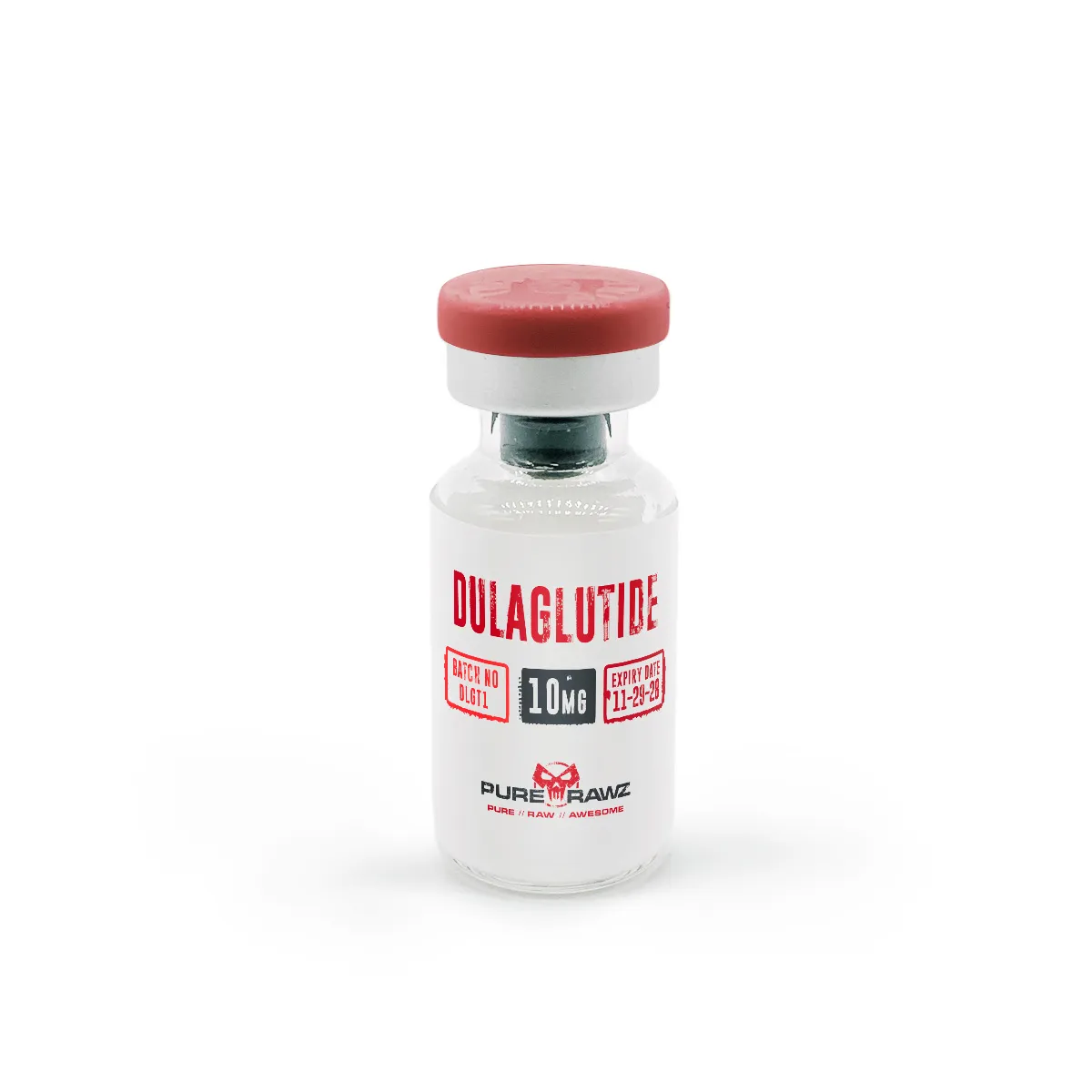
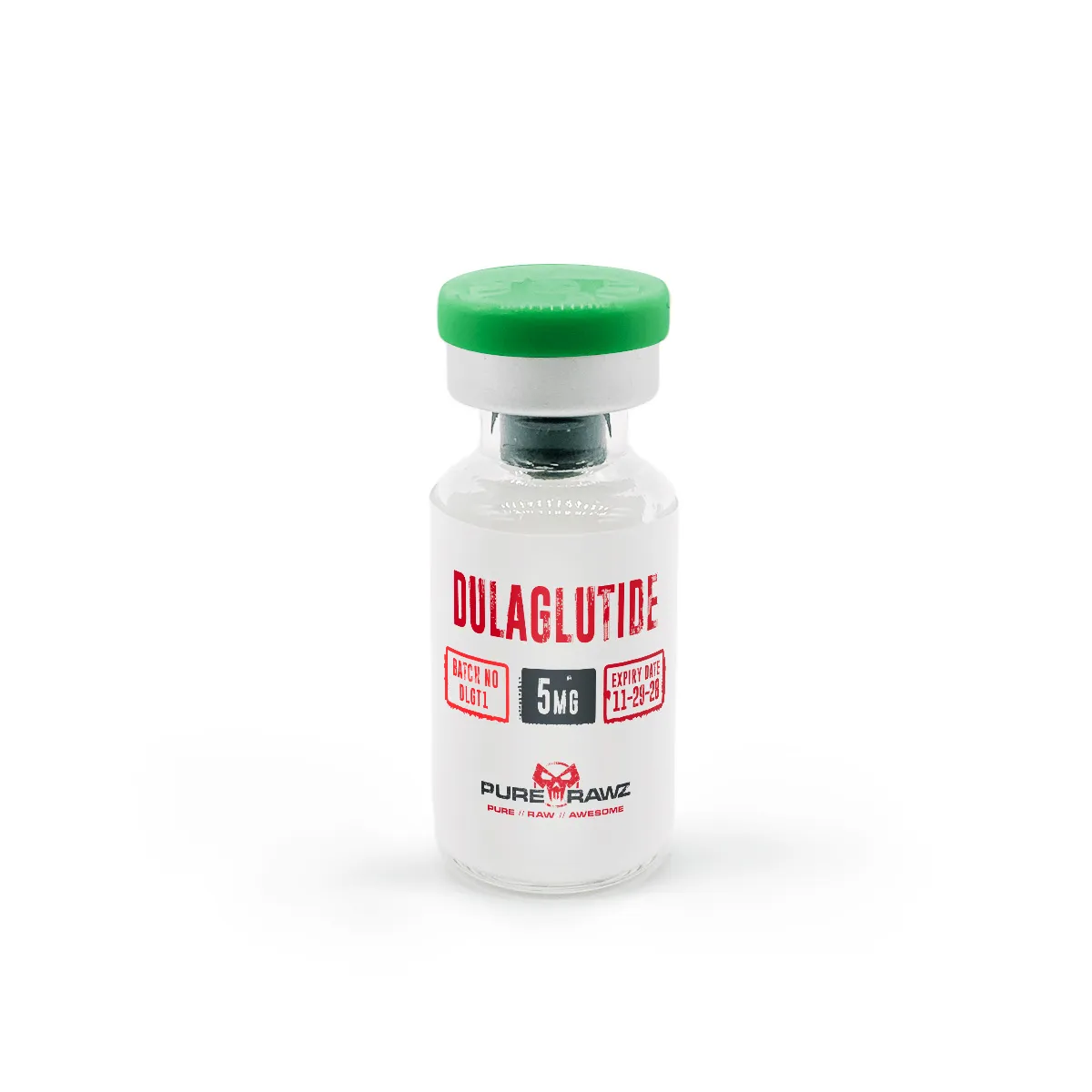
Available SKUs: Dulaglutide 5mg per vial · Dulaglutide 10 mg per vial. Both are lyophilized powders. Same compound, same purity (≥98%), same mechanism – differentiated by vial mass for different research volume requirements. See the “Research Applications” section for SKU selection guidance.
Overview
Dulaglutide (LY2189265) is a synthetic GLP-1 receptor agonist fusion protein consisting of two DPP-4-resistant GLP-1(7–37) analogue sequences – each carrying Gly8, Glu22. and Gly36 substitutions for enzymatic stability – covalently linked via a small peptide linker to a modified human IgG4 Fc heavy chain fragment. The result is a disulfide-bonded homodimer of approximately ~59,700 Da (~59.7 kDa). This molecular architecture was specifically engineered to overcome the primary pharmacokinetic limitations of native GLP-1: a plasma half-life of under two minutes due to rapid DPP-4 inactivation and renal clearance. The IgG4-Fc fusion raises molecular weight above the renal filtration threshold and engages FcRn-mediated neonatal Fc receptor recycling, extending the plasma half-life to approximately 5 days (~120 hours) in published preclinical and clinical pharmacokinetic models (Glaesner et al. 2010, PMID 20503261). Dulaglutide is FDA-approved (Trulicity®) for once-weekly subcutaneous injection in type 2 diabetes management. PureRawz supplies research-grade dulaglutide powder strictly for laboratory investigation of GLP-1R pharmacology, Fc-fusion protein engineering, and related receptor signalling research.
This product is not FDA-approved for any research or therapeutic use. It is not a dietary supplement or consumer product. Availability is restricted to qualified researchers and licensed laboratory institutions. IRB guidance is required for clinical research initiatives. IACUC compliance is required for preclinical animal research.
Chemical Properties
| Property | Details |
| Compound Name | Dulaglutide (LY2189265) |
| CAS Number | 923950-08-7 |
| Molecular Weight | ~59,700 Da (~59.7 kDa) as a homodimer |
| Molecular Formula | C2646H4044N704O836S18 (approximate; homodimer) |
| Structure | Disulfide-bonded homodimer: 2× [GLP-1(7–37)-Gly8,Glu22 analogue + small peptide linker + modified IgG4 Fc heavy chain] |
| Compound Class | GLP-1 Receptor Agonist / IgG4-Fc Fusion Protein | NOT a SARM |
| Synonyms | LY2189265, Trulicity® (brand), dulaglutide |
| Physical Form | Lyophilized white powder |
| Purity | ≥98% (HPLC verified) |
| Solubility | Soluble in sterile aqueous buffers; reconstitute with bacteriostatic water |
| Storage | −20°C, sealed, protected from light and moisture |
| Available Vial Sizes | 5mg per vial · 10mg per vial |
| Regulatory Status | FDA-Approved Prescription Drug (Trulicity®, Eli Lilly) | Research reagent – not a pharmaceutical formulation |
Mechanisms Investigated in Preclinical Research
GLP-1R → Gs/cAMP/PKA Incretin Signalling Axis: Dulaglutide has been characterized in preclinical models as a full agonist at the GLP-1 receptor (GLP-1R), a Class B G-protein-coupled receptor expressed on pancreatic β-cells, intestinal L-cells, hypothalamic neurons, vagal afferent fibres, and multiple peripheral tissues. Upon GLP-1R binding, dulaglutide activates Gs-protein coupling → adenylyl cyclase activation → intracellular cAMP elevation → protein kinase A (PKA) activation. In pancreatic β-cell model systems, this cascade produces glucose-dependent insulin secretion – defined by the requirement for concurrent membrane depolarisation from elevated glucose to trigger exocytosis, conferring inherent selectivity for hyperglycaemic conditions. Published preclinical data (Glaesner et al. 2010, PMID 20503261) document full GLP-1R agonist activity for LY2189265 in vitro in islet cell models and dose-dependent glucose-dependent insulin secretion in rodent and primate pharmacodynamic studies.
IgG4-Fc Fusion Architecture → Extended Receptor Occupancy and Pharmacokinetic Engineering: The molecular engineering of dulaglutide produces three pharmacokinetically significant outcomes characterized in published data (Glaesner et al. 2010, PMID 20503261; Barrington et al. 2011, PMID 21210908): (1) DPP-4 resistance: Gly8 substitution blocks the primary DPP-4 cleavage site at Ala8-Glu9, eliminating the dominant inactivation mechanism for native GLP-1; (2) Renal clearance reduction: the ~63 kDa homodimer exceeds the renal glomerular filtration threshold (~30–50 kDa), dramatically reducing urinary elimination relative to native GLP-1 or small-peptide GLP-1R agonists; (3) FcRn-mediated recycling: the IgG4-Fc domain engages the neonatal Fc receptor (FcRn) in endosomal compartments, enabling transcytotic recycling back to the plasma membrane and extending plasma half-life to ~80–90 hours. This half-life is mechanistically relevant for GLP-1R occupancy duration research – allowing investigation of chronic vs acute receptor stimulation in cell models without repeated compound addition.
GLP-1R Downstream Pathway Effects Documented in Preclinical Models: Beyond the primary Gs/cAMP cascade, GLP-1R activation in published preclinical models has been investigated for: β-cell-specific effects including KATP channel modulation (PKA-dependent phosphorylation of SUR1), voltage-gated calcium channel activation, and GLP-1R-mediated regulation of insulin gene transcription via CRE-binding protein (CREB); glucagon suppression in pancreatic α-cells via paracrine somatostatin signalling and direct GLP-1R α-cell expression; gastric emptying delay via vagal GLP-1R afferent activation – a documented pharmacodynamic effect relevant to gastrointestinal motility research models; and hypothalamic GLP-1R appetite circuit activation, relevant to neuroendocrine research applications.
Research Applications
5mg Vial – Recommended Applications
- GLP-1R binding kinetics: competitive radioligand displacement assays (e.g. [125I]-GLP-1 or [125I]-exendin-4) in GLP-1R-transfected HEK-293 or MIN6 cell lines – sufficient reagent for 4–6 concentration-response points per vial
- cAMP signalling dose-response: HTRF-based or FRET-based cAMP accumulation assays in GLP-1R-expressing βTC-6, MIN6, or INS-1 cell lines from picomolar to nanomolar dulaglutide concentrations
- GLP-1R internalisation and recycling kinetics: confocal microscopy or ELISA-based surface receptor quantification in GLP-1R-GFP fusion cell lines following dulaglutide stimulation
- Fc-fusion protein reference standard: single-lot reference compound for method development, assay calibration, and pharmacokinetic modelling of Fc-GLP-1 fusion protein classes
- Small-scale FcRn interaction assays: dulaglutide as a reference Fc-fusion for FcRn binding affinity and pH-dependent binding/release characterization in SPR or ELISA-based FcRn assay systems
10mg Vial – Recommended Applications
- Full dose-response curve construction across ≥10 concentration points (fM to μM) in GLP-1R cAMP accumulation, β-arrestin recruitment, and receptor internalization assays within a single matched-batch research programme
- Receptor binding characterization: Bmax, Kd, and Hill coefficient determination in saturation binding assays requiring multiple peptide concentration arms simultaneously
- Multi-arm parallel experimental designs: independent replicate arms across multiple cell lines, co-treatment conditions, or timepoints from a single lot – eliminate inter-lot variability as an experimental confound
- Extended-duration receptor desensitisation and resensitisation kinetics: longitudinal experiments requiring daily or weekly compound addition over 2–4-week observation periods
- Comparative pharmacology studies: dulaglutide vs semaglutide, liraglutide, or exenatide head-to-head GLP-1R binding and cAMP signalling studies requiring matched batch material across multiple agonist conditions
Risk & Handling
Handling Precautions
- Handling must be performed by trained laboratory personnel only in a controlled laboratory environment
- PPE required at minimum: nitrile gloves, laboratory coat, and eye protection
- Reconstitute under aseptic conditions using bacteriostatic water. Avoid aerosol generation during lyophilized powder handling
- Handle as a biologically active research peptide with potential GLP-1R pathway activity in biological systems
Exposure Risks
- Risk Tier: high – Dulaglutide is an FDA-approved GLP-1 receptor agonist (Trulicity®). Research-grade powder is not a pharmaceutical formulation. No human safety data have been established for this research reagent at laboratory concentrations. No chronic toxicity data exists for research-grade dulaglutide powder. GLP-1R pathway activation in biological research systems may modulate insulin secretion, glucagon, and gastric motility parameters – researchers must account for these as off-target pathway interactions in all experimental design controls
- Any non-research use or distribution of this compound may violate applicable federal regulations. Purchaser assumes all liability for lawful use
Storage
- Store lyophilized vials (both 5mg and 10mg) at −20°C in sealed, light-protected containers
- Reconstitute with bacteriostatic water under aseptic conditions. Do not re-freeze reconstituted solution
- Reconstituted solution: use within the manufacturer-specified stability window. Stable ≥24 months, lyophilized under recommended conditions
Quality Assurance
- Identity confirmation by nuclear magnetic resonance (NMR) spectroscopy and/or mass spectrometry (MS)
- Purity ≥98% by high-performance liquid chromatography (HPLC)
- Batch-specific molecular identity confirmation for Fc-fusion protein compound class
- Heavy metals analysis (Pb, Cd, As, Hg) per USP <232>/<233>
- Full lot traceability with unique batch number documentation
- Certificate of Analysis (COA) available upon request for both 5mg and 10mg vial lots
- Safety Data Sheet (SDS) available for all products
Why PureRawz
PureRawz supplies dulaglutide as an independently tested research-grade compound across both available vial sizes (5mg and 10mg). Each batch of both SKUs undergoes molecular identity verification by NMR and HPLC, with ≥98% purity confirmed. For complex Fc-fusion proteins where structural fidelity and aggregation state are critical research variables, PureRawz applies batch-specific mass spectrometry confirmation to verify the intact fusion protein architecture. A Certificate of Analysis (COA) documenting identity, purity, and lot traceability is available for every batch of both SKUs. A Safety Data Sheet (SDS) is provided. Researchers requiring batch consistency across a longitudinal study spanning multiple vials should contact PureRawz to confirm matched-lot availability before initiating protocols.
FAQs
What is the difference between the 5mg and 10mg vials?
Both vials contain identical dulaglutide at ≥98% purity with the same mechanism and receptor pharmacology. The 5mg vial is suited to standard assay work (cAMP dose-response, binding assays, small-scale receptor studies). The 10mg vial is designed for larger research programmes requiring full dose-response curve construction across ≥10 concentration points, multi-arm parallel experimental designs, extended longitudinal studies, or comparative pharmacology panels requiring higher total reagent volume from a single matched batch.
Is research-grade dulaglutide the same as Trulicity®?
Dulaglutide is the active pharmaceutical ingredient in Trulicity®. The amino acid sequence and Fc-fusion architecture are the same. However, this research vial is a lyophilized research reagent – not a pharmaceutical-grade drug formulation with excipients, preservatives, or a delivery device. PureRawz does not sell pharmaceutical Trulicity®. This product is for in vitro and preclinical laboratory research only.
What GLP-1R assay systems are most appropriate for dulaglutide research?
Published GLP-1R pharmacology literature has used GLP-1R-transfected HEK-293 cells, native MIN6 murine β-cells, INS-1 rat insulinoma cells, and βTC-6 cells as primary in vitro model systems. cAMP accumulation (HTRF or AlphaScreen), radioligand displacement ([¹²⁵I]-GLP-1), β-arrestin recruitment (PathHunter or NanoBRET), and receptor internalisation (confocal/ELISA) assays are documented model systems for GLP-1R agonist characterization in the published literature.
Why does the half-life (~80–90 hours) matter for in vitro research design?
The extended half-life of dulaglutide is a pharmacokinetic property of the intact fusion protein in physiological plasma conditions. In cell-based assay systems without albumin, the extended plasma half-life does not apply directly. However, the DPP-4 resistance of the Gly8 modification does apply in serum-containing media, making dulaglutide more stable than native GLP-1 in culture conditions containing DPP-4. This stability difference is relevant when designing comparative agonist stability experiments in serum-containing assay media.
What storage conditions are required?
Store both 5mg and 10mg lyophilized vials at −20°C in sealed, light-protected containers. Reconstitute with bacteriostatic water under aseptic conditions immediately before use. Do not refreeze reconstituted solution. Stable ≥24 months lyophilized.
References
- Glaesner W, Vick AM, Millican R, et al. Engineering and characterization of the long-acting glucagon-like peptide-1 analogue LY2189265, an Fc fusion protein. Diabetes/Metabolism Research and Reviews. 2010;26(4):287–296. https://pubmed.ncbi.nlm.nih.gov/20503261/
- Barrington P, Chien JY, Showalter HD, et al. A 5-week study of the pharmacokinetics and pharmacodynamics of LY2189265, a novel, long-acting glucagon-like peptide-1 analogue, in patients with type 2 diabetes. Diabetes, Obesity and Metabolism. 2011;13(5):426–433. https://pubmed.ncbi.nlm.nih.gov/21210908/
Legal Notice – FDA-Approved GLP-1 Receptor Agonist: Dulaglutide (Trulicity®) is an FDA-approved prescription drug. Research-grade dulaglutide powder supplied by PureRawz is a research chemical for laboratory in vitro bioassay and preclinical model research only. NOT approved for human use. NOT a substitute for pharmaceutical Trulicity®. Any non-laboratory use or distribution may violate applicable federal law. Purchaser assumes all liability for federal and state law compliance.
Disclaimer: Preclinical and published scientific research indicates potential mechanisms of action for this compound in laboratory and animal models. Any references to published studies are for informational purposes only and do not constitute a claim that this product produces the same effects in humans. The safety and efficacy of this compound in humans have not been established.
ATTENTION: All products sold by PureRawz are intended for laboratory and research purposes only and are not approved for human consumption, veterinary use, or any other use. Products are not evaluated by the FDA and are not intended to diagnose, treat, cure, or prevent any disease. Customers assume full responsibility for the lawful use of these products in accordance with all applicable federal, state, and local regulations.


Reviews
There are no reviews yet.