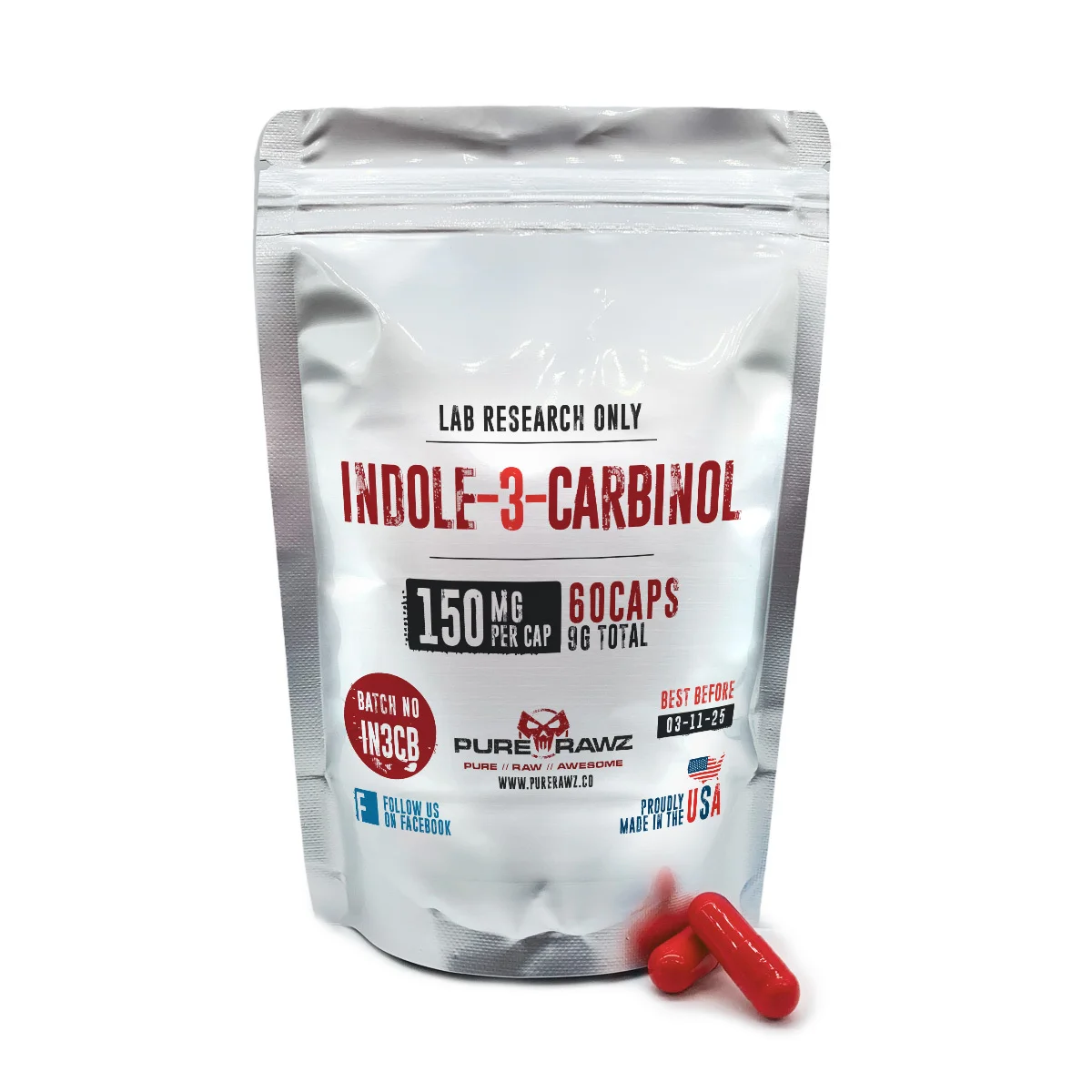
Description
Indole-3-Carbinol (I3C)
Overview
Indole-3-carbinol is a plant-derived indole compound produced during the natural breakdown of glucobrassicin in cruciferous vegetables. In laboratory environments, it is frequently examined for its ability to influence enzymes involved in phase I and phase II metabolic processes.
Once exposed to acidic environments, such as those used in laboratory simulations of gastric conditions, I3C can transform into several biologically active derivatives. Among the most studied are 3,3′-diindolylmethane (DIM) and indolocarbazole compounds, which have been examined for their effects on cellular signaling pathways and enzyme regulation.
Chemical Information
| Property | Description |
| Compound Name | Indole-3-Carbinol |
| CAS Number | 700-06-1 |
| Molecular Formula | C9H9NO |
| Molecular Weight | 147.17 g/mol |
| IUPAC Name | (1H-Indol-3-yl)methanol |
Research Application
Hormone Metabolism Pathways
Several laboratory studies indicate that I3C and its metabolites may influence enzymes involved in estrogen metabolism. These processes may alter the balance of estrogen metabolites by modifying cytochrome P450 enzyme activity.
Cellular Signaling and Proliferation
Preclinical research has explored how I3C interacts with pathways associated with cell cycle regulation. In some experimental systems, the compound has been observed to influence proteins involved in apoptosis and cell growth regulation.
Antioxidant and Detoxification Mechanisms
Indole-3-carbinol has also been studied for its role in regulating biotransformation enzymes involved in detoxification processes. These enzymes help metabolize endogenous hormones as well as environmental compounds. However, the extent of these effects varies across experimental models.
Working Mechanisms
Experimental studies suggest several mechanisms through which I3C may influence cellular activity. Some derivatives of I3C can interact with the aryl hydrocarbon receptor (AhR), a transcription factor involved in regulating gene expression related to detoxification enzymes.
Certain studies have observed that I3C may influence histone modification enzymes, potentially affecting gene expression patterns in experimental systems.
Research has examined how I3C metabolites interact with estrogen receptor pathways and enzymes such as aromatase.
Why Buy Indole-3-Carbinol From PureRawz?
PureRawz provides Indole-3-Carbinol as a research-grade compound intended strictly for laboratory investigation.
Key features include:
- Third-party Certificate of Analysis (COA) verification
- Analytical testing for purity and compound identification
- Secure packaging for laboratory handling
- Consistent supply for research applications
Researchers may use these materials in studies exploring biochemical pathways related to plant-derived indole compounds. to get more information about the product and alternatives
Research Disclaimer
This information is for educational purposes only and not medical advice. Products are for research use only. Research must follow IRB or IACUC guidelines. Verify information independently before purchasing.
ATTENTION: All our products are for LABORATORY AND RESEARCH PURPOSES ONLY, not for veterinary or human use.
References
Bradlow, H. L., Sepkovic, D. W., Telang, N. T., & Osborne, M. P. (1995). Indole-3-carbinol: A novel approach to breast cancer prevention. Annals of the New York Academy of Sciences, 768, 180 200.
Aggarwal, B. B., Ichikawa, H., Garodia, P., Weerasinghe, P., Sethi, G., Bhatt, I. D., & Pandey, M. K. (2006). From traditional Ayurvedic medicine to modern medicine: Identification of therapeutic targets for suppression of inflammation and cancer. Expert Opinion on Therapeutic Targets, 10(1), 87 118.
Fujioka, N., Fritz, V., Upadhyaya, P., Kassie, F., & Hecht, S. S. (2016). Research on cruciferous vegetables, indole-3-carbinol, and cancer prevention. Journal of Nutrition, 146(5), 1130S 1136S.
Reed, G. A., Peterson, K. S., Smith, H. J., Gray, J. C., Sullivan, D. K., Mayo, M. S., Crowell, J. A., Hurwitz, A., & Mehta, R. G. (2005). A phase I study of indole-3-carbinol in women: Tolerability and effects. Cancer Epidemiology Biomarkers & Prevention, 14(8), 1953 1960.



Reviews
There are no reviews yet.